
Hot Tamale Louie
Hot Tamale Louie tells the story of Zarif Khan, an immigrant from Afghanistan to the United States at the turn of the 20th Century.

About Hot Tamale Louie
A multimedia production combining music from multiple genres and locales, Hot Tamale Louie was inspired by a long-form article in The New Yorker by Kathryn Schulz. "Citizen Khan" tells of Zarif Khan, who as a teenager left his home near the Khyber Pass in Afghanistan and eventually settled in the Wyoming town of Sheldon in 1907. He took over the tamale business-a popular fast food of the day-and eventually created a successful restaurant that stood for decades as a meeting place in the small town.
After reading the article, composer and musician John Rapson recognized that this early 20th century story of immigration foretold today's political conversation about what it means to be an American. Indicative of how changing our relationship is to what it means to belong, Khan earned citizenship only to have it stripped because of his ethnicity, and then regained it when laws changed yet again.
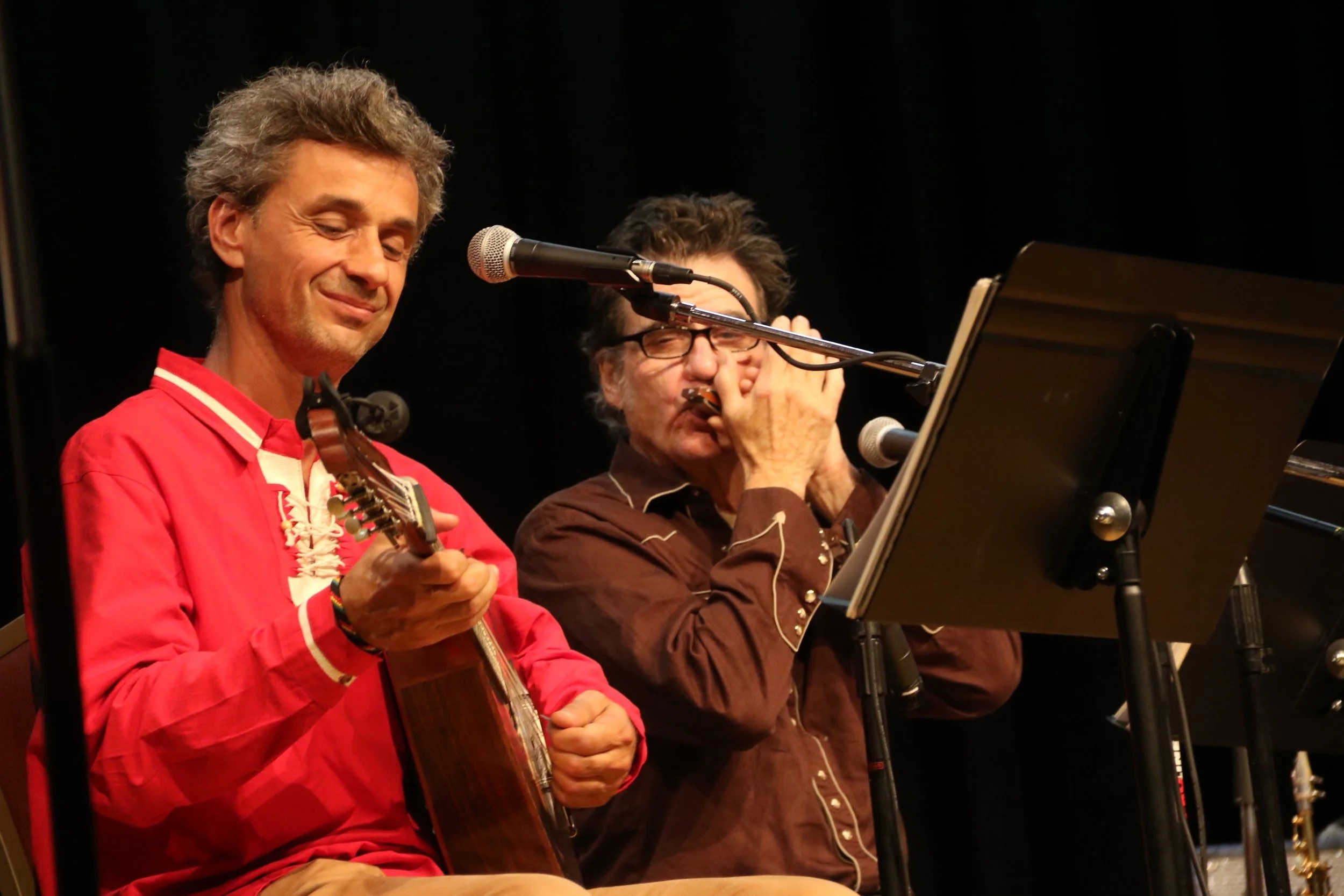
Rapson worked with Daniel “Nielo” Gaglione, a French-born mandole player, and folk musician Dave Moore to create a thirteen-section musical suite evoking different aspects of Khan's life. Gaglione's music evoked Khan's Afghani roots, while Moore provided a pastiche of the frontier American West. Rapson also enlisted Paul Kalina, a University of lowa theater professor and actor, to perform two monologues: one, a history of the tamale; the other a select history of American immigration law.
Hot Tamale Louie was performed several times, including twice at the University of lowa in the springs of 2016 and 2017, at the 2018 lowa City Jazz Festival, and also in Sheridan, WY, where members of Khan's family still live.
Press
LITTLE VILLAGE MAGAZINEThe weird and inspiring story of Hot Tamale Louie will come to musical life for lowa City Jazz Fest
OBERMANN CENTER FOR ADVANCED STUDIESThe Making of "Hot Tamale Louie": Fantastical immigrant’s tale inspires multi-genre production